
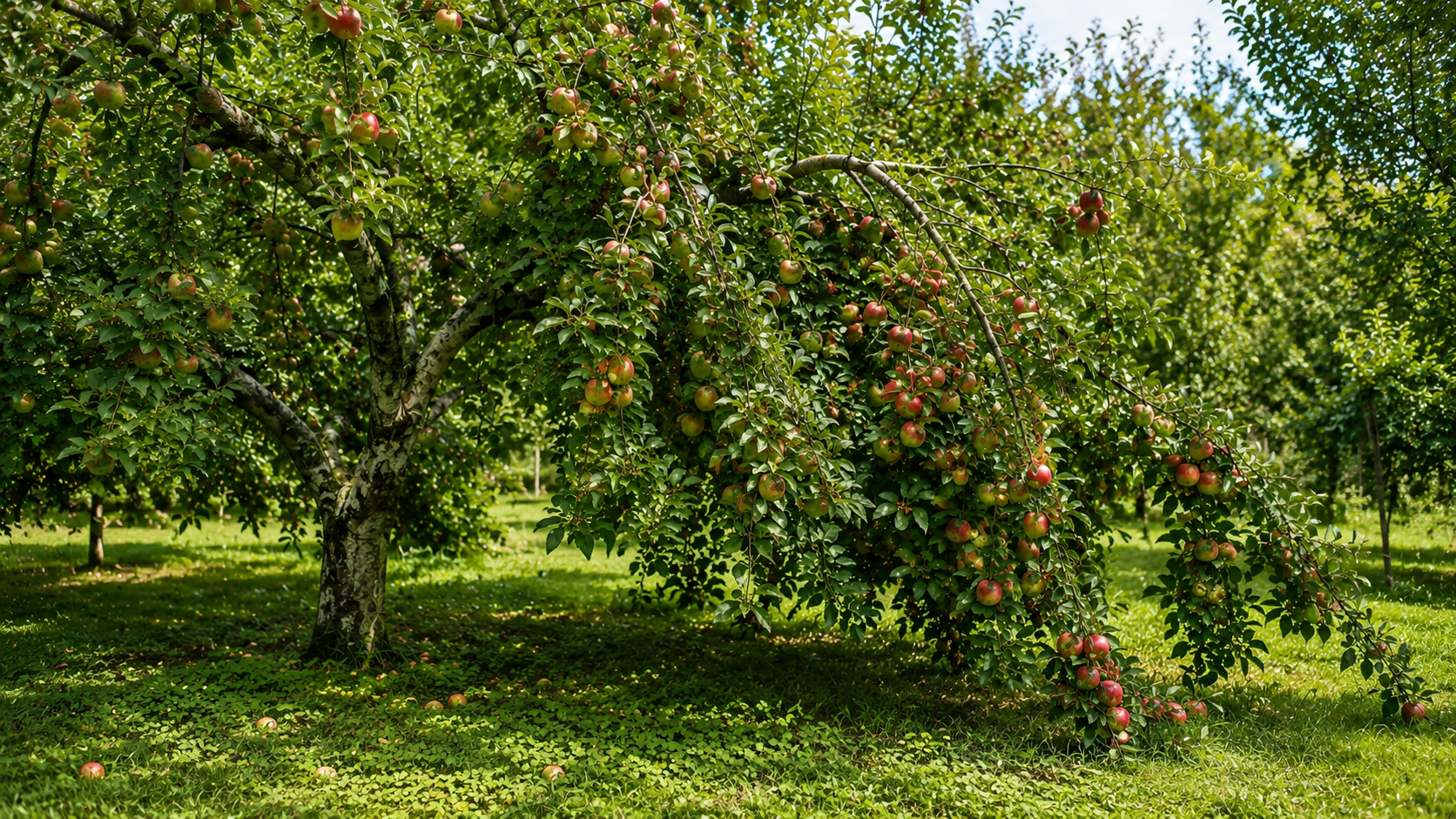
There is an old image worth sitting with. A tree, heavy with fruit and flowers, its branches bent so low they nearly touch the ground. The more it has to give, the lower it bends. No tree stands upright and demands applause for its blossoms. The very evidence of its abundance is its humility.
Most of us assume the relationship works the other way. We assume that the more we achieve, lead, or contribute, the more entitled we become to stand a little taller, expect a little more, tire a little less. And when that entitlement meets a world that does not cooperate, we call the exhaustion that follows "burnout" and blame the work.
But when I look closer, the story does not hold up.
The work was never only ours to begin with
Think about anything we have ever been able to give, whether it was a decision, a piece of guidance, a body of work we built. None of it arrived from nowhere. It came from years of people who taught us, circumstances that shaped us, and a string of opportunities that had to line up quietly in the background long before we ever stepped forward to lead. The ability to give is rarely self-made. It is inherited, borrowed, and assembled from far more sources than we ever credit.
And even then, ability alone is not enough. It also requires someone willing to receive. A leader with the sharpest insight in the room is powerless if no one is willing to listen. Every act of leading, teaching, or contributing depends as much on the openness of the person receiving it as it does on the one giving it. The opportunity to give, in other words, is itself a kind of gift.
And yet, if it is genuinely a gift, why does it so often feel like a burden instead? We need to ask, is ‘the work’ really the burden? If the work itself were the burden, it would affect everyone the same way, every time. But two people in the exact same circumstances can come home feeling entirely different, one exhausted, one fulfilled. Even the same person feels differently about the same work on a different day. So the drain must be coming from somewhere else.
Where the drain actually comes from
Most of the depletion we attribute to our work is really coming from two quieter places.
The first is where our sense of identity is anchored while we work. When we act mainly for our own recognition or gain, the effort eventually tends to feel heavier and the motivation to keep going fades faster. But when the same effort is done in service of something wider, a loved one, a team, a community, even a nation, it tends to feel more sustaining. The task has not changed. What has changed is how far our sense of "self" extends while we are doing it. And that widening rarely needs manufacturing. It is usually enough to notice that the good we are working towards was never ours alone to enjoy, that the people we love are already standing inside the outcome. Work that carries them too has a way of carrying us further.
The second is that for any pursuit to succeed, both the intellect's conviction and the mind's desire for it need to align, and the two often want opposite things. The mind moves through emotion, the intellect weighs reason, logic, and values. Without that alignment, the friction rarely stays private. It shows up as the doom scroll that lasts hours, and it is often the silent saboteur behind what we later call burnout. Bringing the two into agreement is slow work, and it begins simply with catching the disagreement in the act. Where noticing is not enough, the desire itself can be raised rather than fought, connected to something large enough that the intellect is willing to stand behind what the mind already wants.
Leadership is supposed to enlarge who I am. Then why do I feel smaller?
The work I do is for something considerably larger than me. I chose it, it matches what I value, and I love the doing of it. There is very little argument running between my mind and my intellect about any of it. By everything written above, I should be inexhaustible. I am not, and this year I have watched a lot of people around me quietly wonder the same thing about themselves.
Therefore, something else must still be at play, and it turns out to be the quietest of the three.
We rarely walk into an effort without some picture in our head of how it should go, how people should respond, what should follow. When reality does not match that picture, we feel let down, and that disappointment sits on the mind long after the moment has passed. The heaviness we feel at the end of a long day is often not the work. It is the gap between what we expected and what actually happened.
And there is a sharper version of this that catches exactly the people least likely to suspect it. One quiet expectation stays tucked inside the giving, that so much good, given so selflessly, should be met with gratitude. When it isn't, or worse, when criticism comes instead, it wounds in a way plain self-interest never would, because the identity itself now feels wounded.
What is actually ours?
Having widened who we are working for, and having chosen work we genuinely love, it is worth being precise about what is still actually ours. The preparation is ours. The care taken is ours. Whether the room listens, whether the timing holds, whether the person we helped ever says so, none of that was ever in our hands. The presentation is ours to build. How it is received is not. Which is exactly what the Gita says:
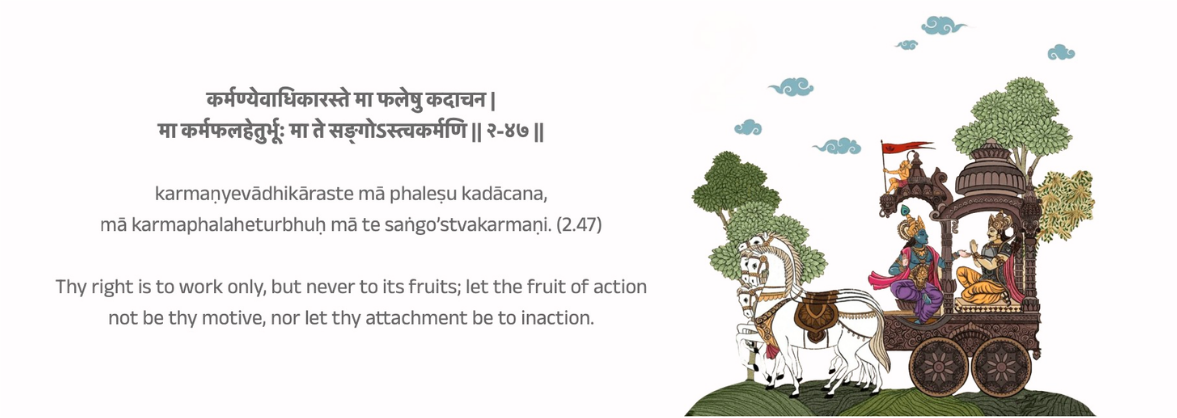
"your right is to the action alone, never to its results." Give your best. Let go of how it is received. Correct what is yours to correct. What isn't, is very often someone else's own baggage, and was never really about you.
The strange part is that widening the identification does not seem to make this easier. Rather, it almost seems to make it harder. When the outcome mattered only to me, I could afford to be casual about it. Now that a whole community is standing inside the result, the pressure to control it grows, and so does the temptation to hold it tighter. Anyone who has held sand knows how that ends. The tighter the grip, the more runs out.
What loosens it is memory rather than resolve. Think back to the times you gave something everything you had. How much of what followed did you actually engineer? For most of us the answer is uncomfortable. The help arrived from a direction we were not watching. The door opened that we had not knocked on. We were credited for outcomes we can barely locate our own hand in.
The Gita answers that a few verses later:
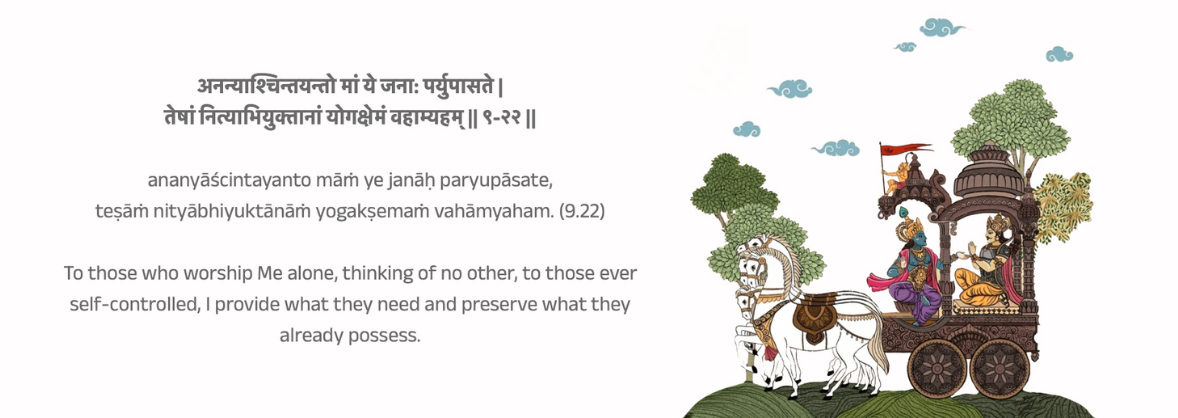
For those who are wholehearted, thinking of no other, Krishna assures that "what they lack will be brought to them and what they have will be preserved." Swami Swaroopanandaji often draws attention to the word, "Brought. Not sent."
The condition matters as much as the promise. It asks for effort that holds nothing back. What comes back is not a guarantee that things go our way. It is something steadier. What is needed arrives, and it has been arriving all along, quietly, while we were busy single pointedly doing our duty.
Which is what finally settles the expectation. If so little of any outcome was ever ours to produce, there is not much left to demand from it, and not much left to feel cheated of when it does not arrive in the shape we pictured.
So,
The next time mental fatigue sets in, before blaming the work itself, pause and ask, “where is the drain actually coming from?”
Aishna S. Chulani is an alumna of the Make It Happen Course. This piece is her personal reflection, written after sitting with what the course taught her.